Ask most project teams when commissioning planning begins, and the honest answer is: later than it should.
On a significant proportion of technically complex projects, the commissioning plan is treated as a late-stage document — something produced after the design is largely complete and construction is underway. This is one of the more costly assumptions in project management, and it compounds quietly until it does not.
Why Commissioning Is Planned Late
The reasons are understandable, even if the outcome is not.
- Commissioning feels distant in the early phases. With detailed design and procurement consuming all available bandwidth, a document about the end of the project competes poorly for attention.
- Commissioning expertise is often brought in late. If the commissioning lead is not appointed until construction is advanced, the plan reflects what is possible rather than what is optimal.
- There is an implicit assumption that commissioning planning can be done quickly once the scope is clear. In practice, the scope is never as clear as expected, and the time is never as available.
What the Delay Actually Costs
The cost of a late commissioning plan is not simply schedule delay at the end of a project. It propagates backward.
- Systems boundaries are not defined early enough to inform construction sequencing. This creates interdependency conflicts that must be resolved under pressure.
- Pre-commissioning checklists are developed reactively rather than planned systematically. Punch lists grow, and the distinction between pre-commissioning and commissioning defects becomes contested.
- Vendor and OEM attendance requirements are not factored into the overall schedule. Lead times for specialist support are longer than assumed, and gaps emerge.
- Handover to operations is delayed not by construction progress but by documentation and testing completeness — an entirely avoidable outcome.
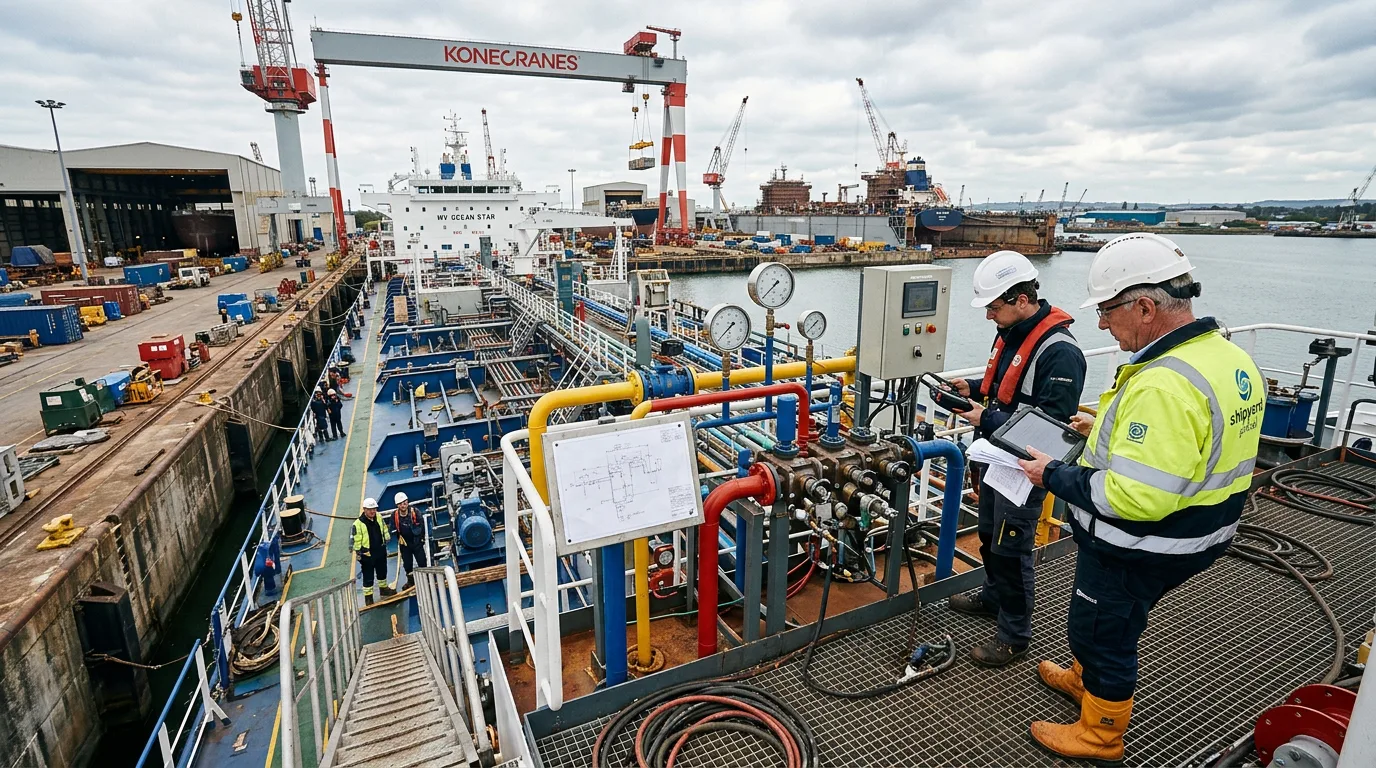
On naval and submarine projects in particular, the consequence is compounded by the interdependency of systems in confined spaces. A commissioning sequence that has not been planned from first principles will encounter conflicts that no amount of late-stage effort can fully resolve.
What Early Commissioning Planning Actually Requires
A commissioning plan written at project inception does not need to be complete. It needs to be live.
Specifically, it should establish from the outset:
- The systems breakdown structure — what are the commissioning systems, and how do they map to the construction work packages?
- The commissioning sequence — what must be completed before what, and where are the critical interdependencies?
- The pre-commissioning and commissioning boundary — what tests and checks occur within each phase, and who is responsible for sign-off?
- The documentation requirements — what records must exist for each system to be handed over, and who is accountable for producing them?
- Resource and access requirements — what specialist attendance is needed, and when must it be confirmed?
This plan evolves throughout the project. That is expected. What it provides from the start is a framework that design, procurement, and construction decisions can be tested against.
The Principle
Commissioning is not the last phase of a project. It is the phase that every earlier phase must be planned to reach. Treating it as anything less is a planning assumption that tends to be corrected at cost.
If you are in the planning or execution phase of a technically complex project and want an independent view on your documentation control, we are happy to have that conversation. Reach out at ram@moryasolution.com or visit moryasolution.com/contact.